


Integrating glass into modern sauna design: solutions and benefits
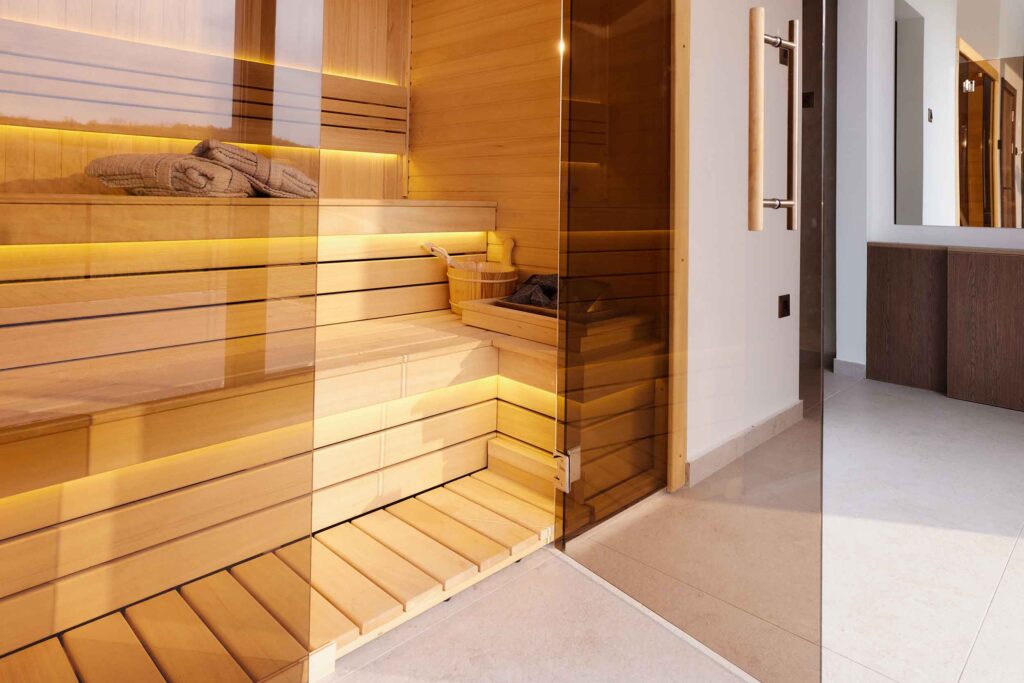
In non-residential projects that include relaxation areas, saunas can become spaces with their own identity by integrating glass into the overall design. Choosing the right materials influences the look as well as the functionality and safety of the space. Correctly processed glass offers a variety of solutions, from visual delineation to light and privacy control. If you’re an architect or developer, it’s worth exploring how glass can be used in modern sauna design.
Integrating safety glass into the sauna structure
The integration of safety glass into the sauna structure offers solutions tailored to safety, strength and visibility requirements. Through the toughening process, the glass acquires increased impact resistance, making it suitable for high-traffic areas, for example.
Furthermore, the tempered glass can withstand temperature variations up to 200-250°C instantaneous difference. In the sauna, the temperature usually reaches 60-110°C, so ESG (monolithic tempered glass) is sufficient for optimal thermal resistance.
For direct access directly into the sauna, the toughened glass swinging doors offer a simple and strong solution. A typical example for a sauna is an 8mm tempered glass door with stainless steel hinges and wooden handles to prevent overheating.
In projects that include saunas, glass walls can be adapted by CNC cut-outs for special grips or shapes. In general, partitions made of 10-12 mm ESG (monolithic toughened glass) panels are used, fixed with special profiles and clamps. They can be integrated into access routes or vestibules, providing a clear separation between areas;
It should be taken into account to use stainless aluminum profiles, high temperature resistant silicone or EPDM gaskets. It is essential that the mounting allows the glass to expand without mechanical stress.
A recommended option for saunas can be TIMELESS glass, which is anti-corrosive treated glass that prevents white spots and makes maintenance easier. Timeless glass is transparent and less water remains on its surface than regular glass.
Integrating laminated glass in sauna access areas
Laminated glass can be an option for doors or walls shared with other spaces, for secure and durable boundaries. In saunas, you can opt for lamination with two or more sheets of glass, joined by transparent or frosted foil. The choice of film type influences opacity and moisture behavior. For steamy environments, EVA or other specialized foils that are more resistant to moisture are recommended.
The integration of laminated glass in sauna partitions allows areas to be separated without blocking natural light. Fluid spaces can be created with controlled visibility, depending on the film density or type of glass used. You can opt for:
- transparent boundary panels. Laminated-secure glass panels can separate the sauna area from adjacent spaces without blocking visibility. They can be made with side clips or hidden hardware, depending on the architectural concept. By CNC machining, cut-outs for ventilation can be included in the glass;
- laminated-secure sliding glass doors. In sauna access areas, sliding doors allow smooth opening and save space. Damping or self-closing systems can be integrated, depending on user flow. Glass can be clear, ultra-clear or with ceramic digital print for visual demarcation. The thickness is determined according to the project specifications, generally taking into account the size of the glass panel;
- visual delimitations with ceramic digital print. Laminated-secure glass digitally printed with ceramic ink can be used to delineate access areas. You can print patterns, symbols or images that indicate the role of space;
- access areas with partial delimitation.In some projects, access to the sauna is through semi-open areas, partially enclosed with tempered or laminated glass. Fixed or mobile panels can be used, depending on the flow of users. Glass can be printed with signs indicating the direction of access. These solutions help organize space without creating visual clutter.
Custom CNC-cut cut-outs allow the glass to be precisely adapted to the specific sauna areas in hotels and wellness centers. Shapes can include cut-outs for hidden fastenings, decorative cutouts or perforations that support integration into the architectural ensemble. The resulting space maintains visual continuity and meets commercial requirements.
Integrating digitally printed glass with ceramic ink in saunas
Integration digitally printed glass with ceramic ink into saunas offers varied customization opportunities without affecting the structural behavior of the material. The printed glass benefits from increased resistance to scratches, UV rays or temperature differences, making it suitable for the humid environment in saunas and the heavy traffic in these areas. Examples of applications:
- customized sauna access doors. You can create tempered glass doors with ceramic digital print with patterns, symbols, text or an image, depending on the architectural concept. The clamping systems can be adapted for sliding or swing mounting;
- delimitations with varying degrees of transparency. For separating sauna areas, opt for glass printed with ceramic ink for controlled privacy. Patterns can mimic sandblasting or can be made with varying densities, depending on the level of opacity desired. This solution is suitable for partitioning between showers, changing or treatment rooms;
- decorative walls with visual identity. Glass walls digitally printed with ceramic ink can include themed images that support the concept of the space;
- integrated information elements in glass. Opt for ceramic digital print with text or icons indicating the type of sauna, recommended temperature or instructions for use. Information can be integrated directly into the glass, without the need for separate plates.
Benefits of integrating glass into modern sauna design
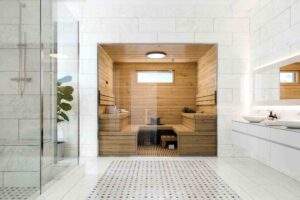
Integrating glass into modern sauna design offers a number of benefits that can support both safety and personalization of the space. Depending on the type of glass chosen and the processing technology, the results can be tailored to the project requirements. Common benefits include:
- controlled transparency and visual demarcation. Clear or ultra-clear glass keeps natural light in the sauna area without creating visual blockages. Compartmentalization can be created that separates functions without closing off the space. Transparency contributes to fluid access routes. The choice of brightness depends on the setting;
- temperature and moisture resistance. The tempered glass resists thermal variations and exposure to steam. In sauna areas, where conditions are intense, the structural behavior of the glass remains stable. EVA or other special moisture-resistant films can be used for laminated glass. This reduces the risk of delamination or staining;
- With digital ceramic printing, images can be printed directly onto glass to support the visual identity of the space;
- safety in use and burglary behavior. The safety glass fragments into small, non-breakable pieces in case of breakage, reducing the risk of injury. In access or compartment areas, you can opt for laminated safety glass for extra protection;
- adaptability to customized shapes and cut-outs. Through CNC machining, the glass can be cut into special shapes with cut-outs for hardware or ventilation.
For architects and developers working on non-residential projects, integrating glass into sauna design offers a wide range of solutions. The type of glass is chosen according to technical, aesthetic and safety requirements. When exploring options for your projects, consider incorporating glass as a central element in your sauna design!