


Curved glass – Fluid design and customized technical solutions
Curved glass is the perfect choice for projects that aim to combine functionality with modern aesthetics. Transparent Design manufactures custom curved glass using state-of-the-art technologies, tailored to each client’s requirements—whether for commercial buildings, residential spaces, or spectacular interior designs.
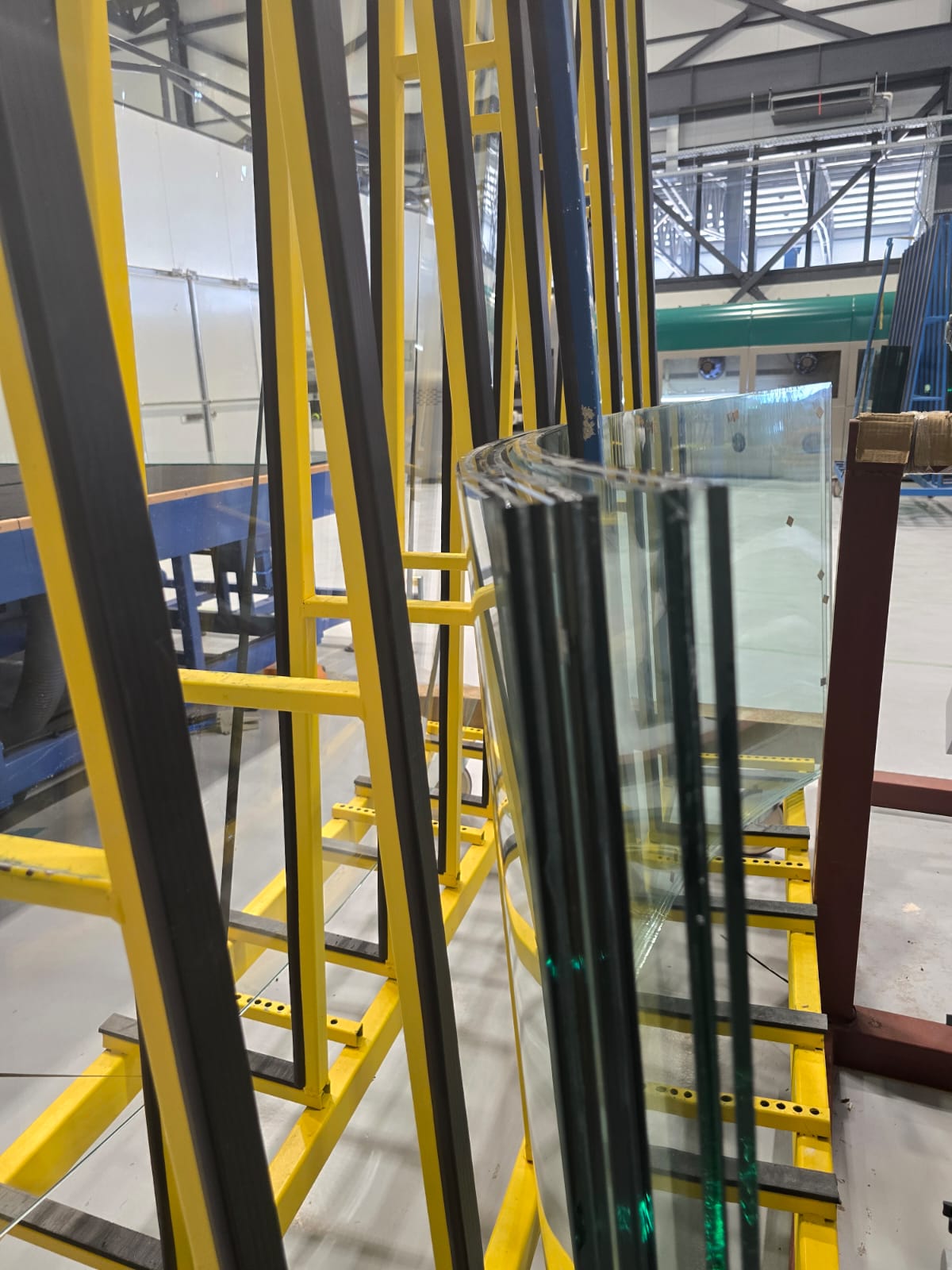
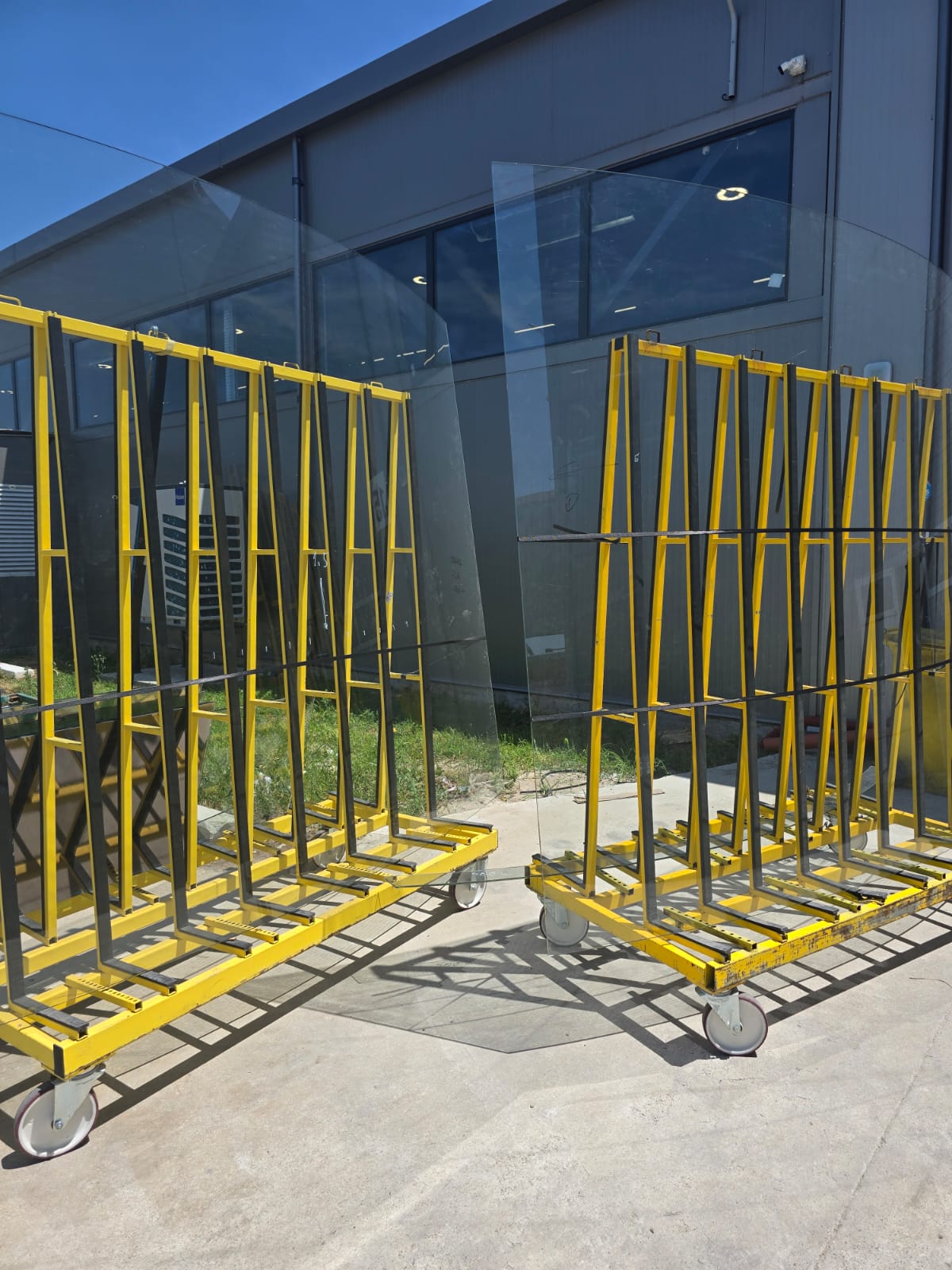
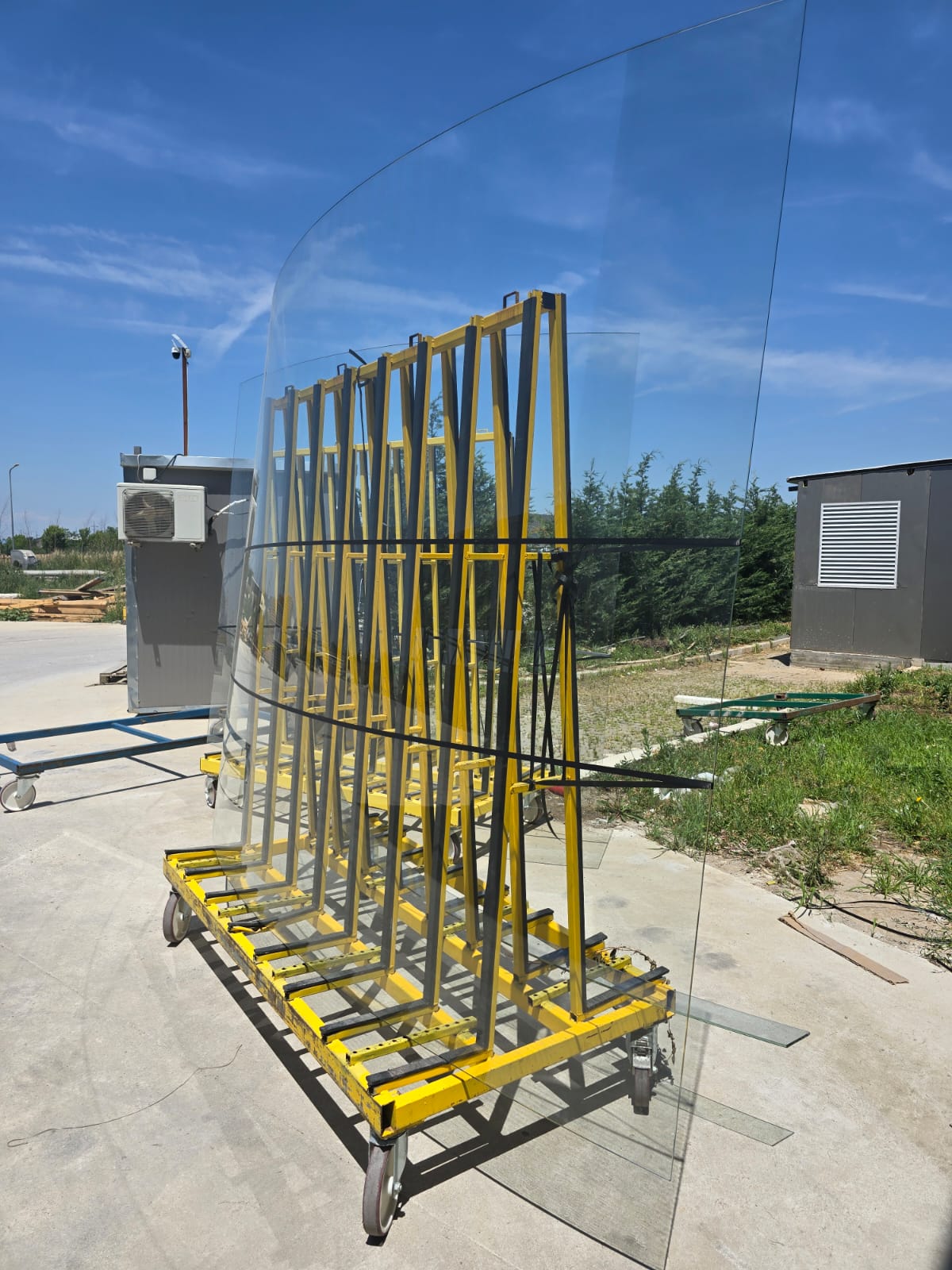
Curved glass is a type of glass that has undergone a controlled heating and forming process to achieve a concave or convex shape while maintaining its transparency, strength and structural integrity.
We are expanding our product portfolio for the construction market by entering the curved glass segment, both concave and convex, covering a wide range of bending radii thanks to computerized programming.
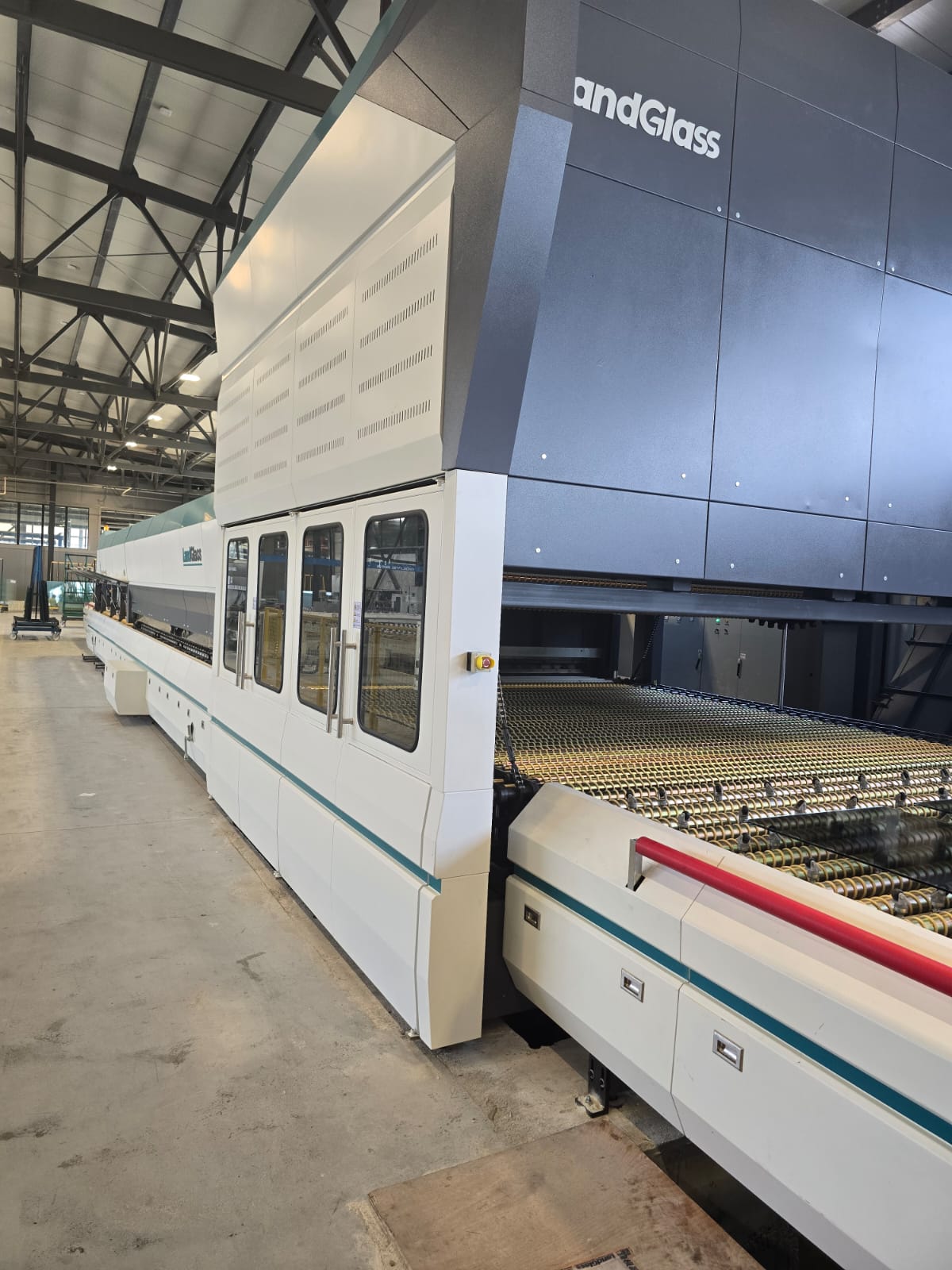
Professional equipment for curved glass:
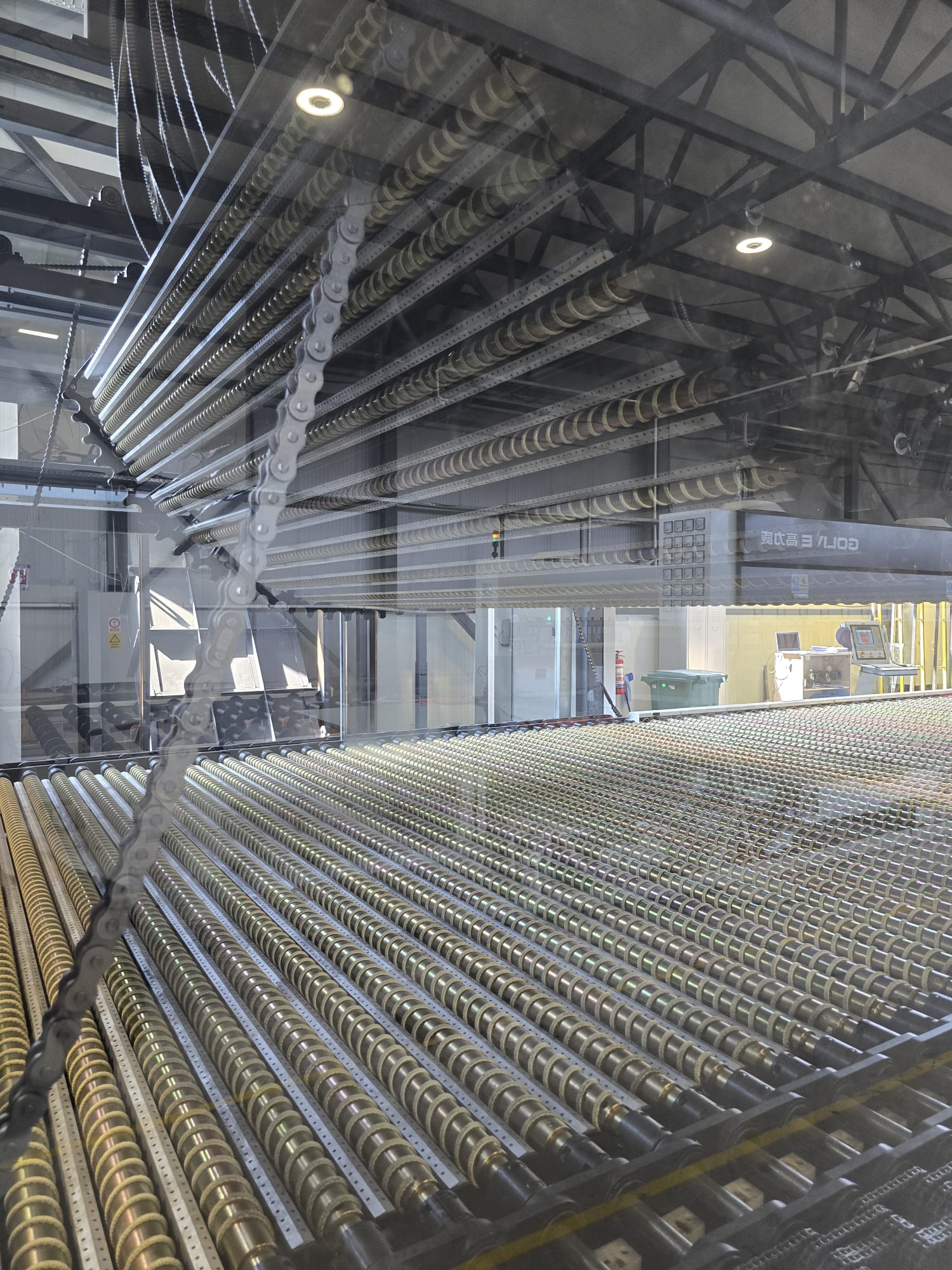
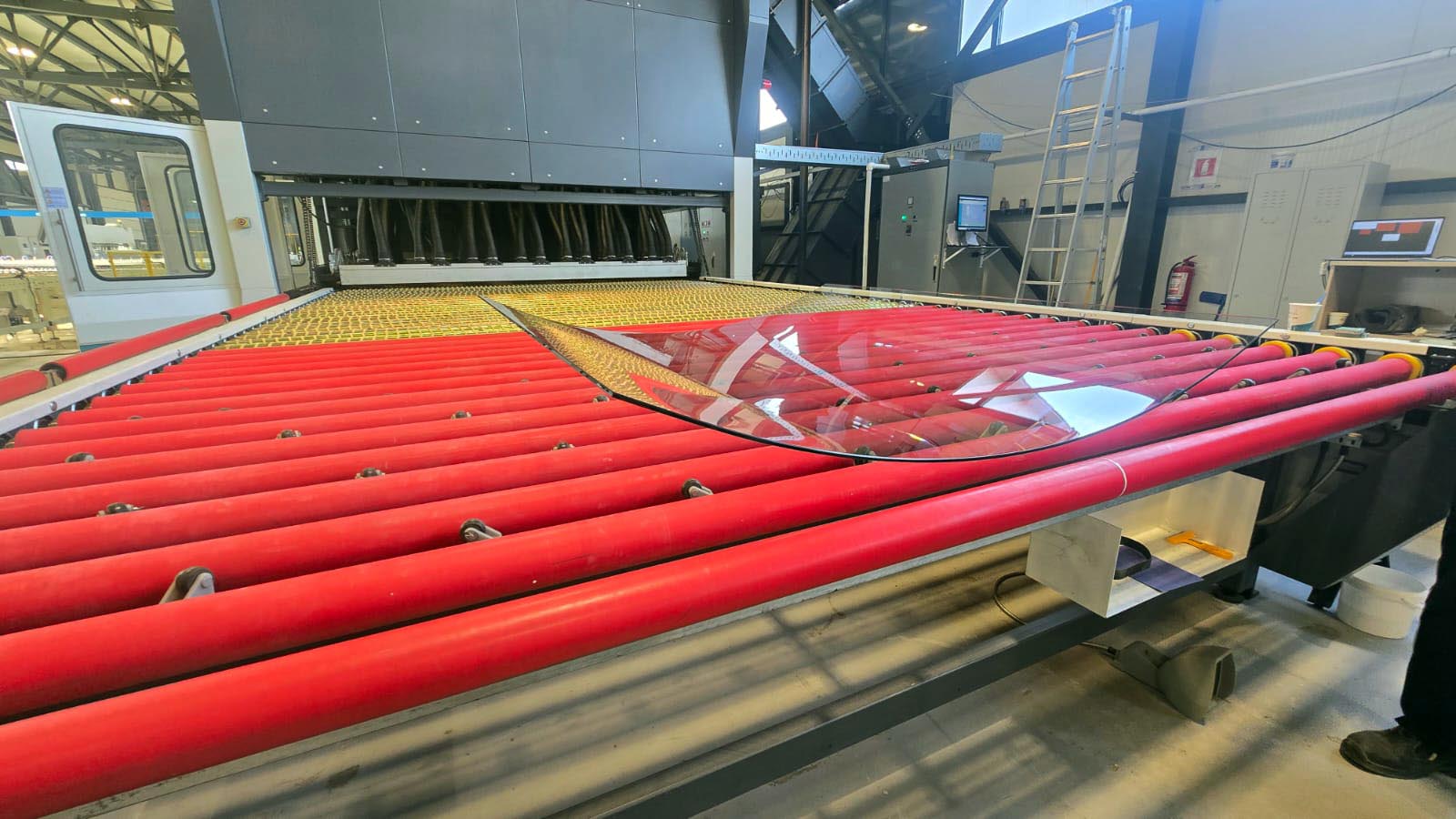
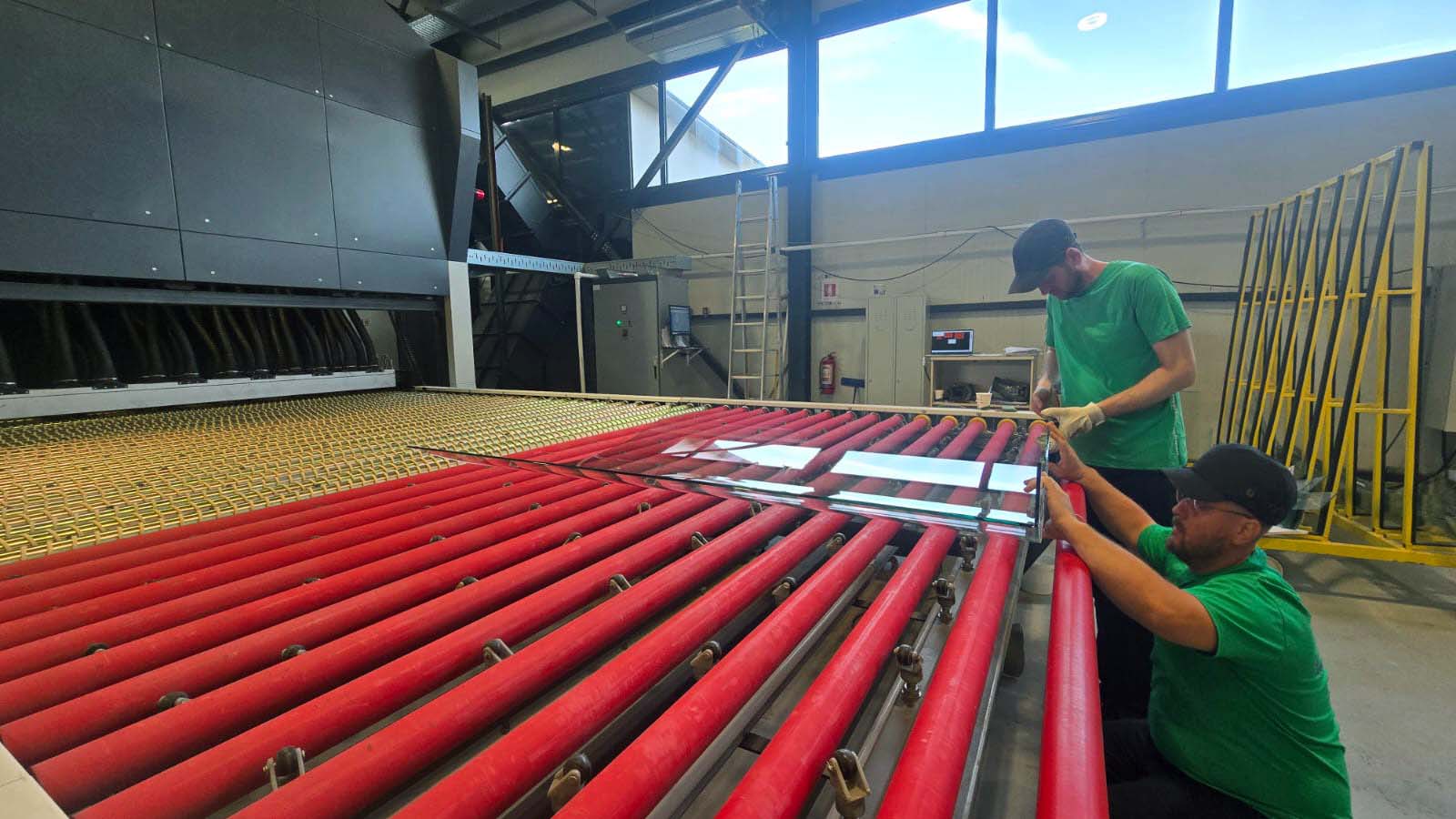
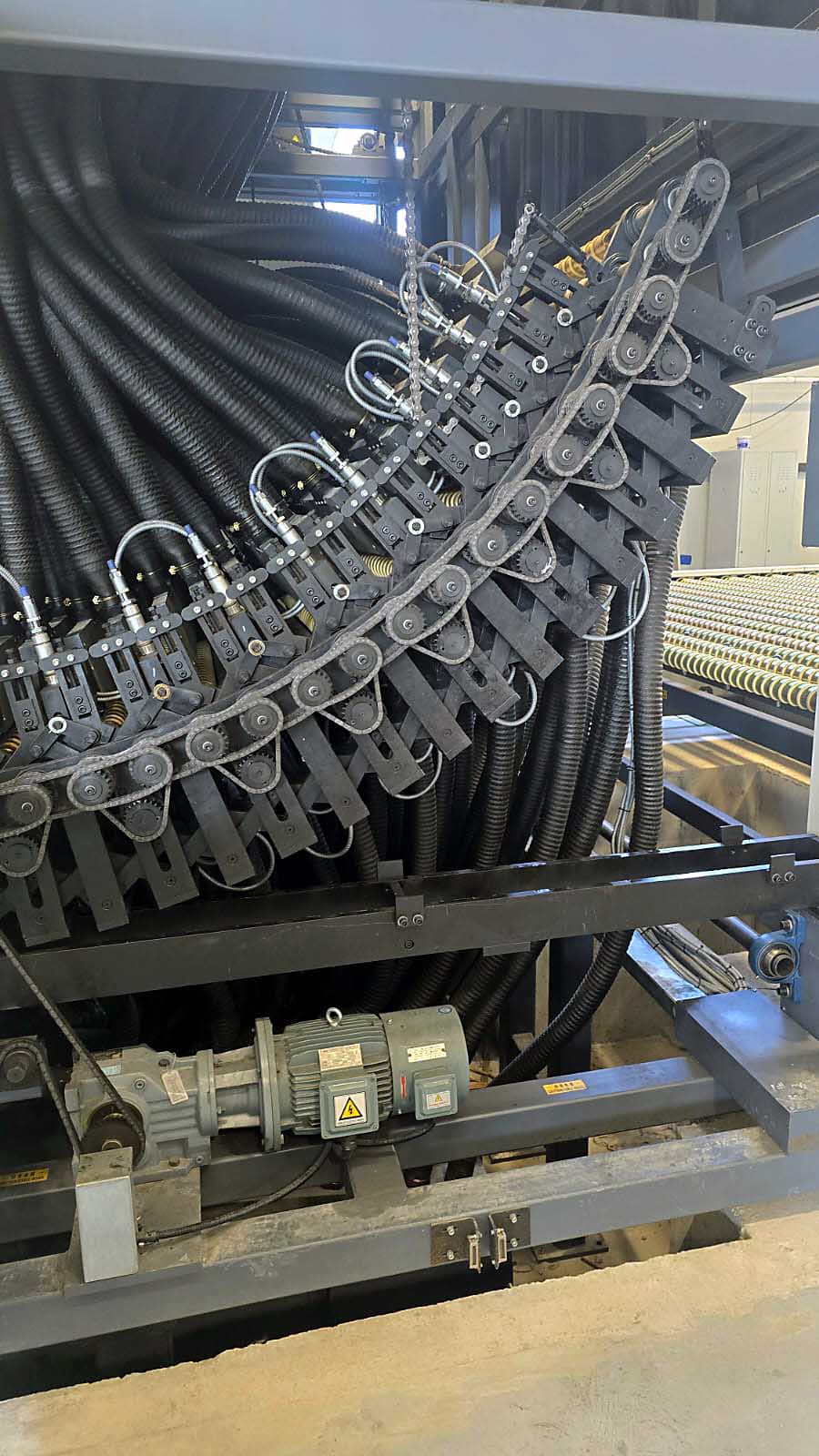
Curved glass can be produced using several methods, but the method implemented by Transparent Design, using bending modules on tempering lines, is one of the most modern and efficient. It allows for uniform curves with precise radii, increased production speed and the combination with other processes (e.g. lamination after bending).
- We have recently put into operation an automated bending module, which allows us to produce tempered curved glass with an arc size of up to 3000×3000 mm and a minimum bending radius of 1500 mm, depending on the glass thickness.
- Soon we will add two new automated bending modules to our existing furnaces, enabling curves with a minimum radius of 600 mm, depending on the glass thickness.
- We are in the process of commissioning a new line for tempering and bending glass sheets of up to 9000×3000 mm, both convex and concave. The minimum allowed radius for concave bending is 2500 mm (for 8–10 mm thick glass), and for convex bending 3500 mm (for 8–10 mm thick glass).
The glass bending process can be applied to a wide variety of glass types, depending on the project’s aesthetic, functional, and safety requirements: clear float or low-iron glass, low-E glass, body-tinted or acid-etched glass.
Where is curved glass used?
Curved glass is ideal for:
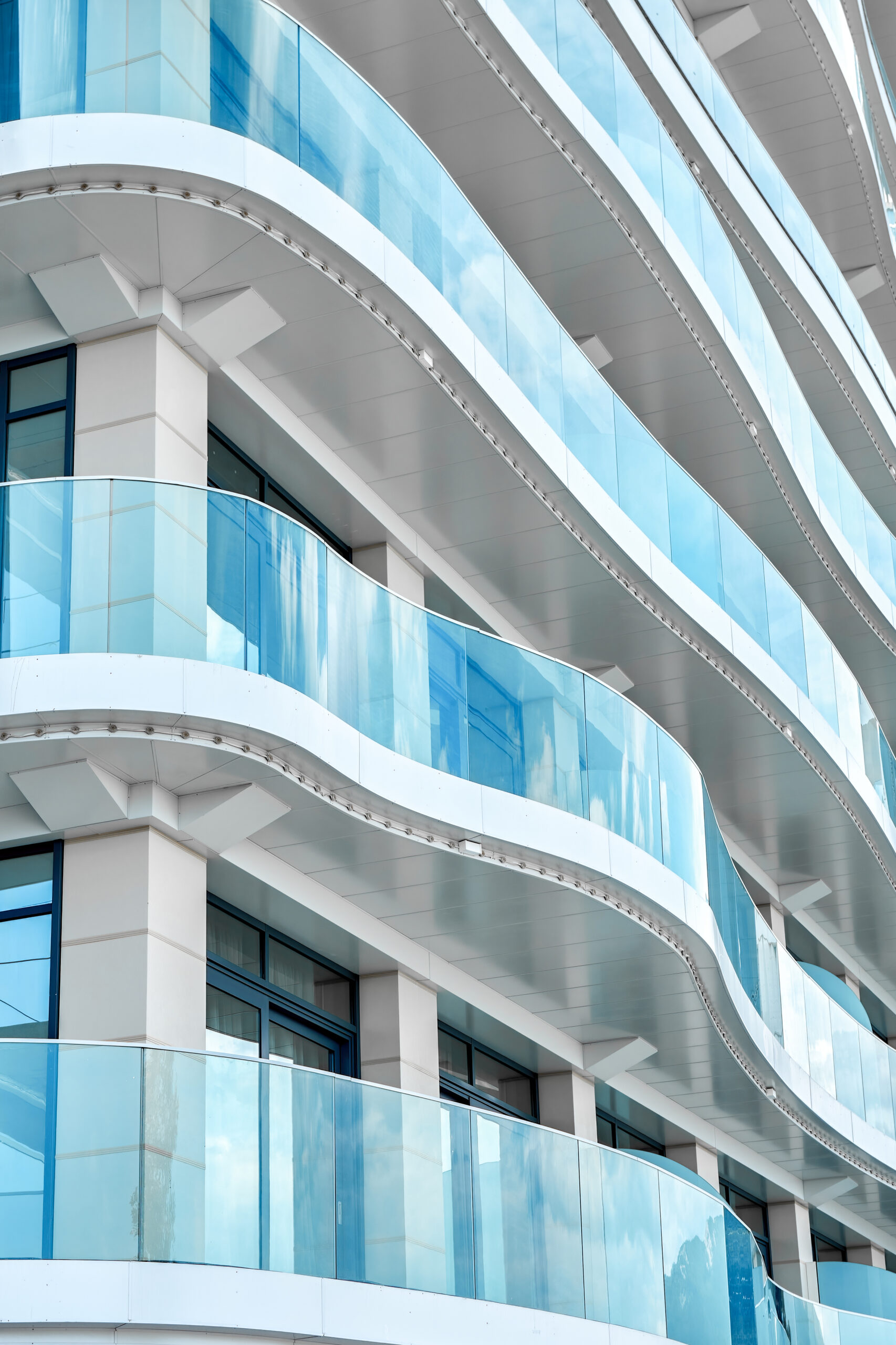
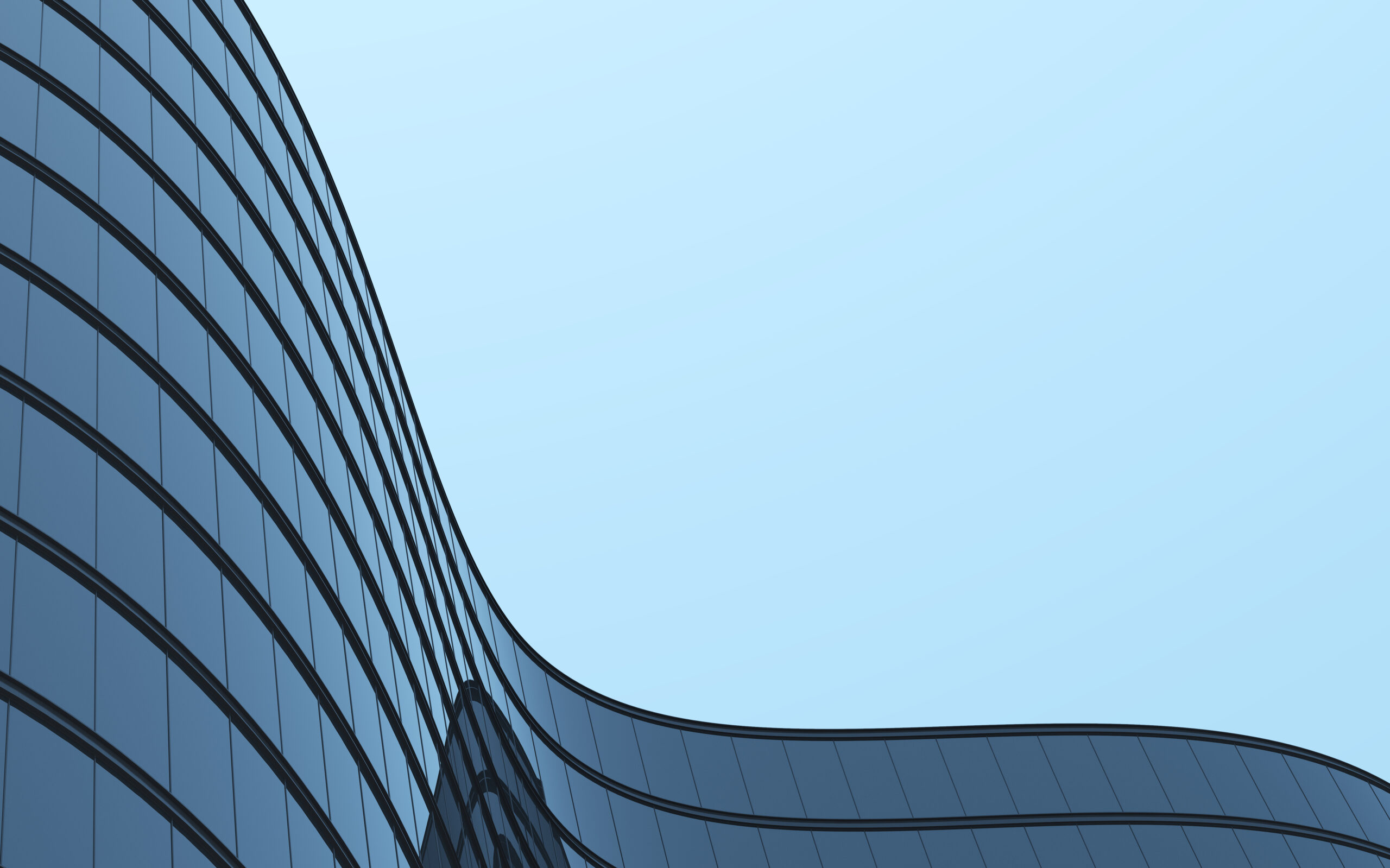
- Facades and curtain walls
- Glazed roofs and domes
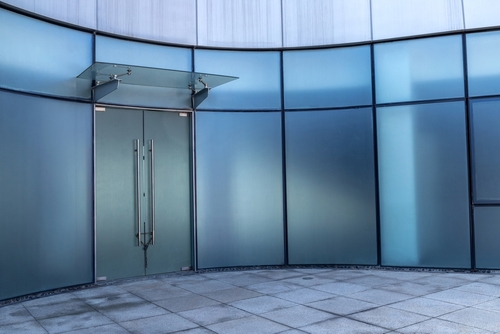
- Curved partitions and interior walls
- Semi-circular shower enclosures
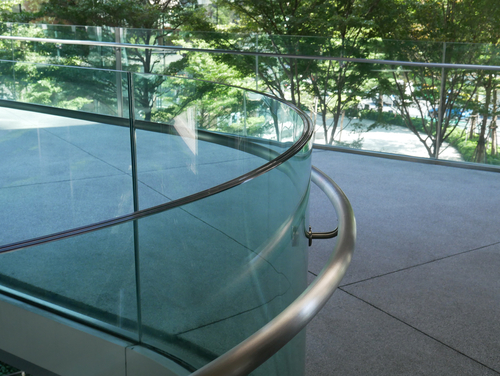
- Interior and exterior railings and staircases
- Custom furniture – display cases, coffee tables, shelves
- Commercial display windows with strong visual impact
- Exhibition protection panels for museums, galleries, performance halls
- Pedestrian or transport tunnels with glass domes
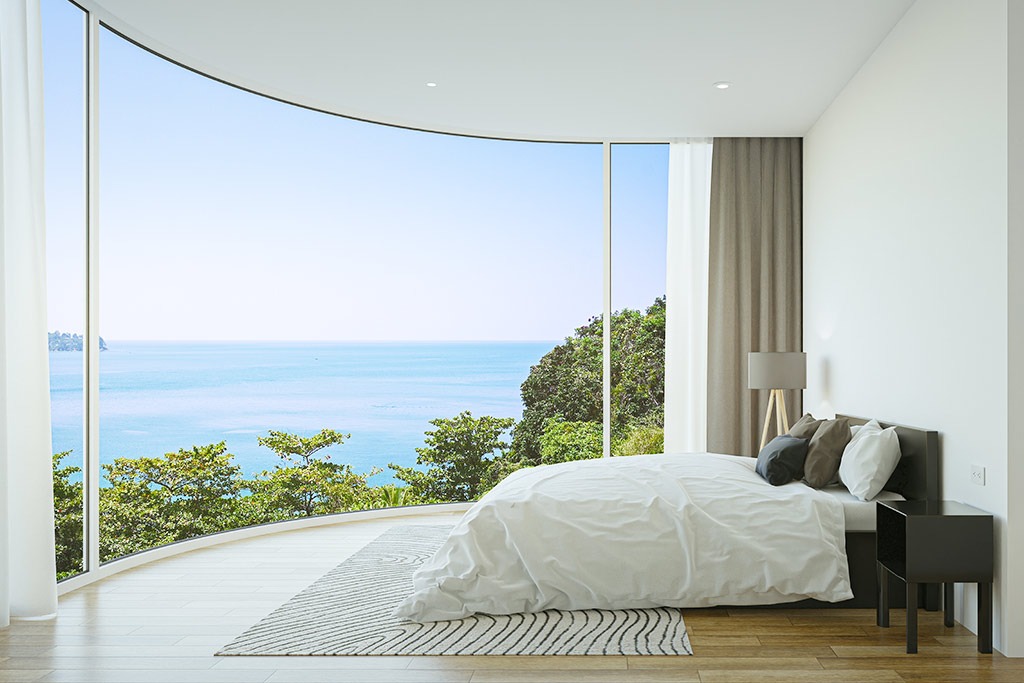
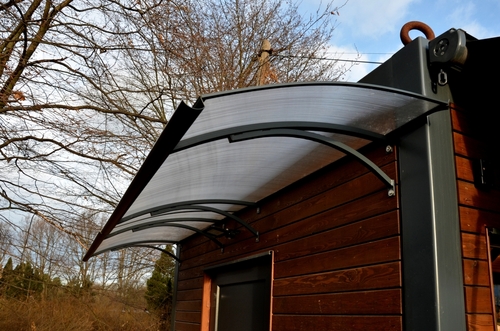
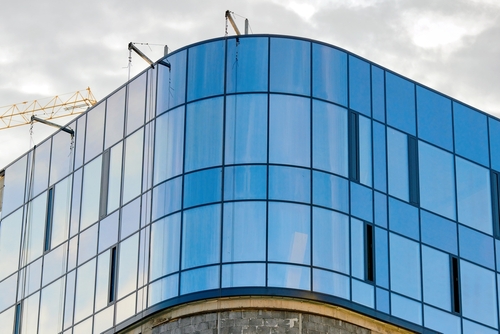
Dimensions and Technical Details for Curved Glass
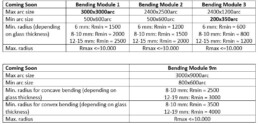
- Available thicknesses: between 4 mm and 19 mm
- Bending radius: customizable according to the project
- Available glass types: float, ultra-clear (low-iron), chemically frosted, tinted, tempered, laminated
- Additional processing: drilling, cutouts, enameling, digital printing
Benefits of curved glass from Transparent Design
The method used by Transparent Design for producing curved glass is a modern one, utilizing a bending module integrated into the tempering line. This modern method offers a number of advantages beyond the traditional benefits of curved glass in general:
• Modern and fluid design – eliminates sharp corners, offering a refined aesthetic
• Brightness and transparency – allows natural light to penetrate any space
• Strength and durability – ideal for heavy use and various conditions
• Enhanced safety – curved glass at Transparent Design’s factory allows tempering and bending in the same cycle. Additionally, the curved glass can be laminated afterward for maximum strength.
• Full customization – various bending degrees, sizes, and glass types (tempered, laminated, chemically frosted, etc.). Standardized, symmetrical curves with various radii (defined minimum/maximum radii).
• High productivity. Efficient and fast process. No molds required. Ideal for medium and large series.
Frequently Asked Questions about Curved Glass (FAQ)
The traditional method for producing curved glass involves heating flat glass and shaping it on a special mold to achieve a curved form. After cooling, it retains its shape and can be tempered for increased strength.
The method used by Transparent Design is simultaneous bending and tempering, using a bending module integrated into the tempering line. The glass is heated in a tempering furnace, then precisely bent in the bending module (without a gravity mold), and immediately rapidly cooled (tempered). This allows bending and tempering in the same cycle, resulting in standardized, symmetrical curves with various defined radii (minimum/maximum). It ensures high productivity thanks to an efficient and fast production process, without the need for molds, making it ideal for medium and large series.
The degree of curvature depends on the size, thickness, and type of glass used. At Transparent Design, we can produce custom curvatures based on project specifications, with various bending radii.
Yes, especially when tempered or laminated. These processes make it much more resistant to impact and breakage, making it ideal for high-traffic or high-altitude areas.
Absolutely. It is ideal for facades, balconies, shop windows, or balustrades. Heat-treated or laminated glass can be used for weather resistance.
Yes. Each order is made on request, based on the provided drawings or specifications.
Depending on complexity and quantity, production time is usually 2-3 weeks.
How to get a personalized curved glass quote for your project?
Fill out the quote request form below, call us or write to us directly, and the Transparent Design team — curved tempered glass manufacturer — will get in touch with you!
If you send us the completed form with as many project details as possible, including glass type, thickness, bending radii, .dwg files, sketches, and dimensions of the desired panels, we can quickly provide you with a price estimate for the customized tempered glass.
Please note that it is important for us to know the project location from the beginning so we can properly assign your quote request.