


Fire-resistant borosilicate glass
Starting from August 2025, we are one of the three approved processors in Europe for the German manufacturer Schott, for the heat treatment and processing of fire-resistant glass PYRAN® S.
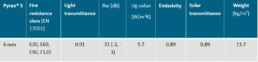
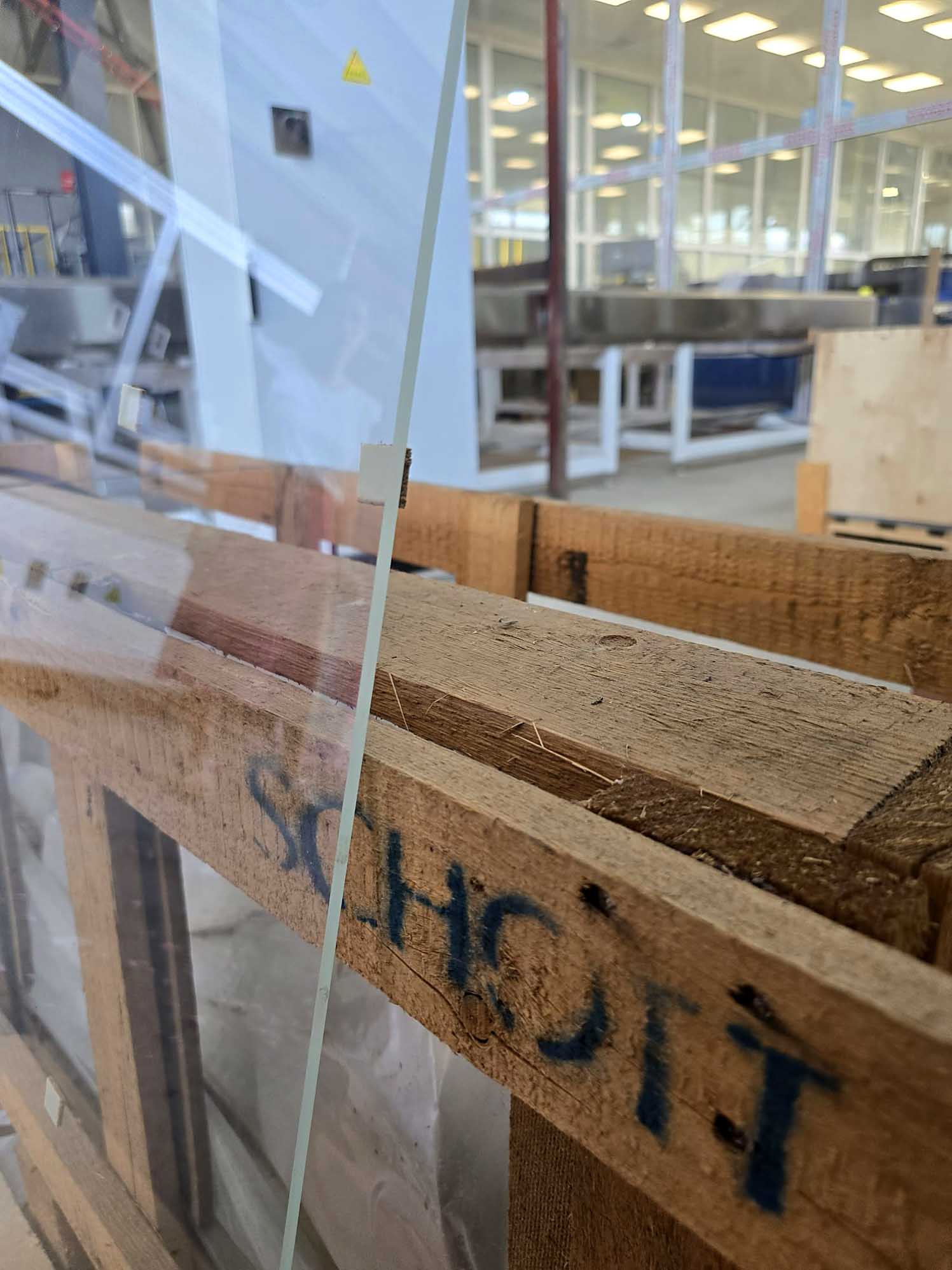
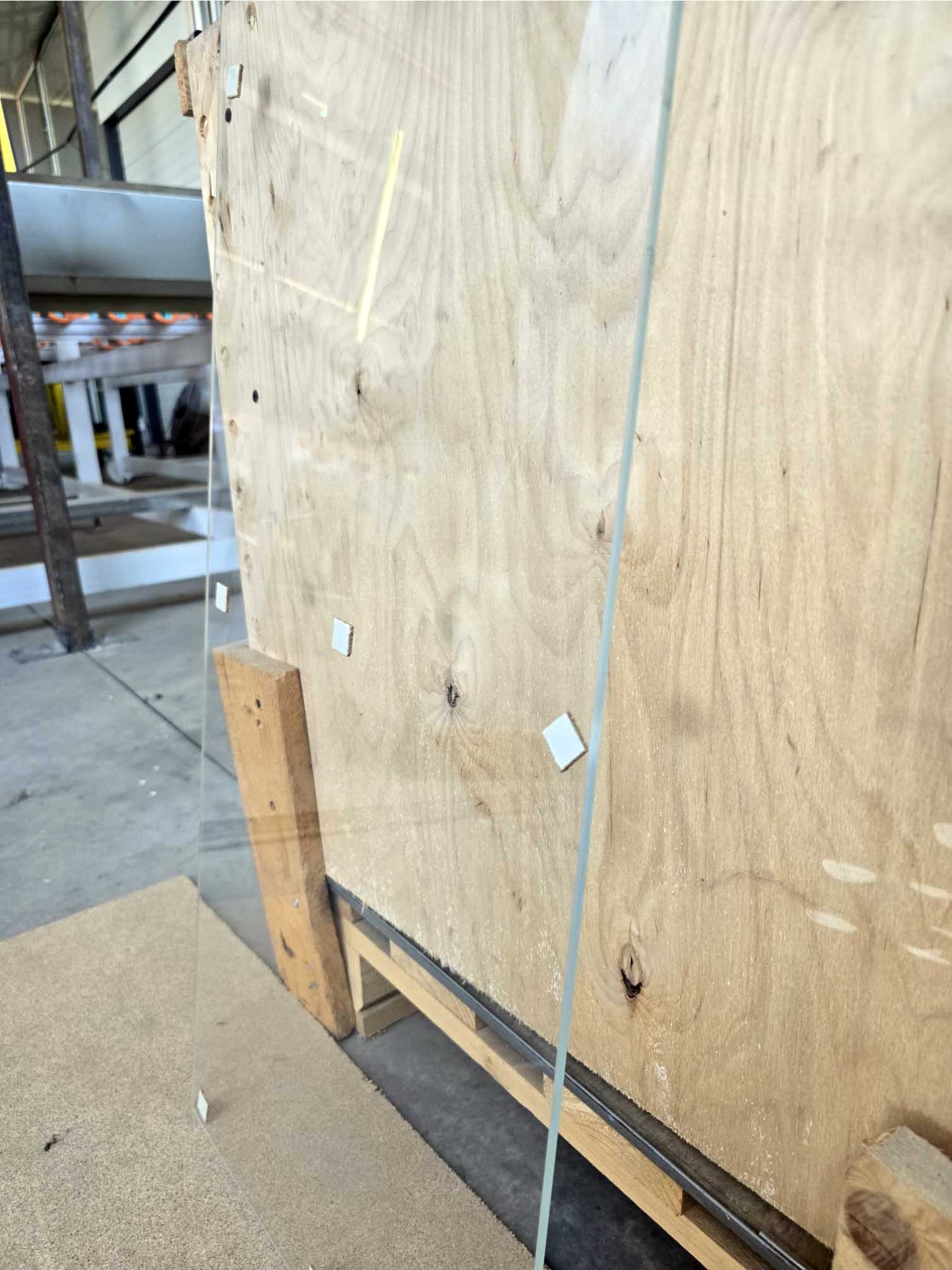
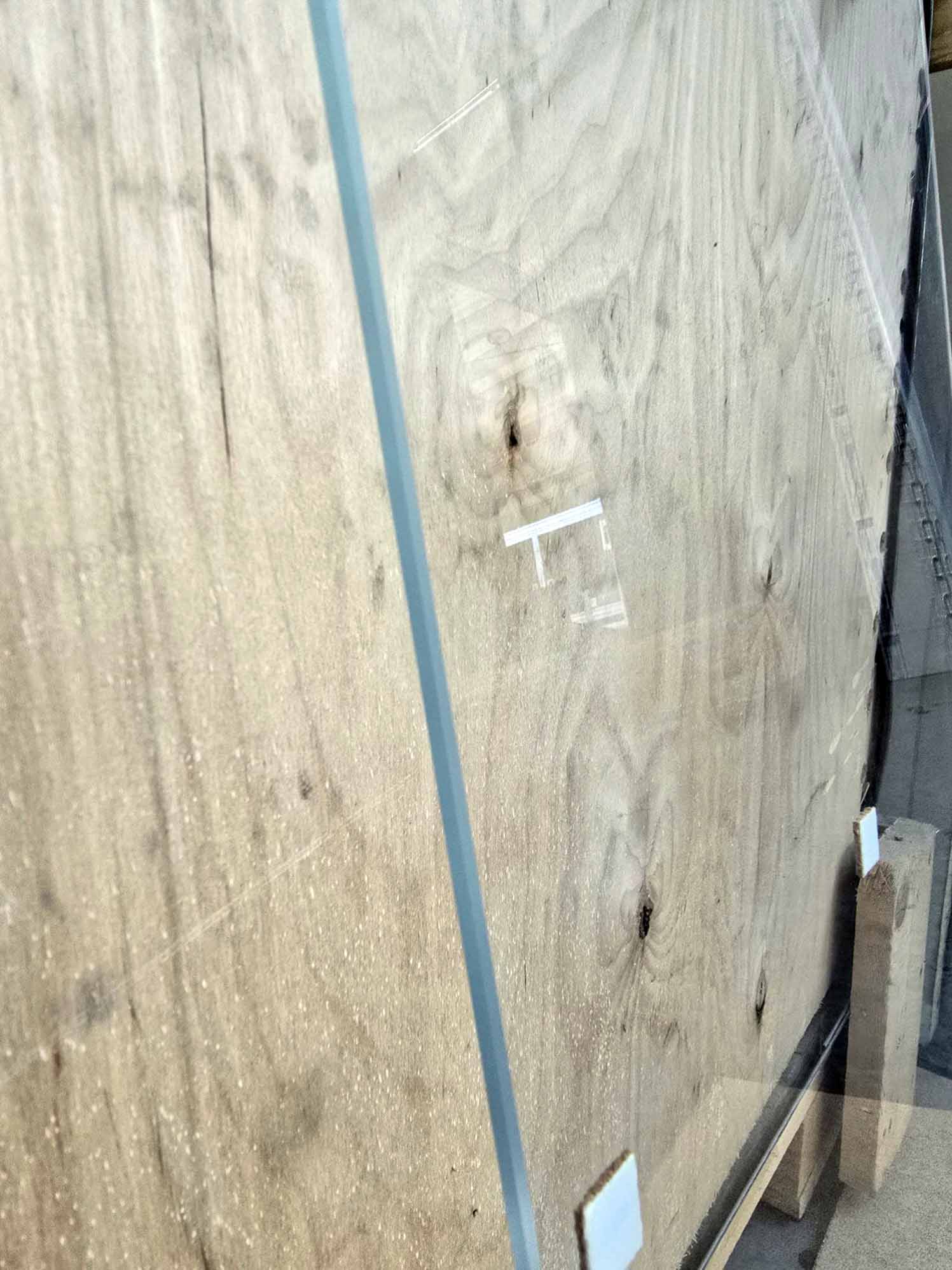
PYRAN® S is a monolithic, borosilicate, heat-treated, fire-resistant glass, extremely versatile, ideal for applications requiring fire protection, visibility and lightweight monolithic glass panels.
Available thickness: 6 mm
Panel size in stock: 2100 mm x 3200 mm
What is borosilicate glass?
Soda-lime glass is the standard of the glass industry — versatile, ideal for most architectural and general-use applications. This type of glass is the basis of the float glass manufacturing process. However, it is not recommended for extreme conditions — high temperatures, thermal shocks or severe chemical exposure. Soda-lime glass can withstand sudden temperature differences of up to 75°C, with a melting point of up to 1.400°C.
Borosilicate glass is a special high-performance glass material, recognized for its optical clarity, dimensional stability, temperature resistance and chemical durability. It is produced through a special float process, similar to architectural float glass, but adapted for technical glass. Borosilicate glass can withstand a temperature difference of up to 520°C and has a melting point of up to 1.700°C.
Advantages of Schott’s Pyran® S Glass:
Increased fire resistance
PYRAN® S is a monolithic borosilicate glass with enhanced fire resistance. With a thickness of 6 mm, it can achieve fire resistance ratings between E30 and E120 minutes, depending on the panel size.
Transparency
Pyran® S glass remains transparent even at high temperatures.
Higher viscosity
In addition, it has higher viscosity than soda-lime glass and does not melt under fire exposure (reduced flow behavior).
CE marking
Compliance with applicable EU requirements
Other specific characteristics:
- Lightweight monolithic glass (even lighter than float glass)
- Premium clear-glass appearance, ensuring a pure and natural color rendering
- Resistant to aggressive environmental factors
- High transmittance in both visible and ultraviolet spectral ranges
- Suitable for outdoor use, without limitations related to UV radiation or temperature fluctuations
- Resistant to abrasive chemical solutions
- Easy to use in architectural projects with high requirements, available in large sheets up to 2100 mm x 3200 mm, smooth, for unobstructed visibility
- The chemical composition prevents the formation of NiS crystals, eliminating the risk of spontaneous breakage. Therefore, Pyran® S glass does not require the Heat-Soak Test (HST).
Compatibilities:
PYRAN® S glass can be:
- Laminated with other types of glass (e.g., tempered, body-tinted)
- Incorporated into IGUs (insulating glass units) for energy efficiency
- Installed with standard fire-resistant frames, depending on certification
Fire resistance classes for Pyran S:
PYRAN® S glass can be classified as E30, E60, E90 or E120, depending on the configuration (frame, thickness, installation type).
Fire-resistant glazing is always a system solution! Therefore, besides the glass itself, all other components of the assembly must also be fire-resistant (frame, silicone, proper installation).
The indicators E30, E60, E90, E120 are European classifications of the fire resistance of construction elements (including fire-resistant glazing), established according to standard EN 13501-2.
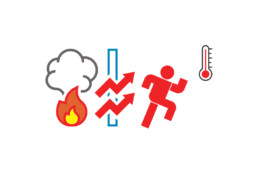

Example: A glazing classified as E60 will prevent the passage of flames and hot gases for at least 60 minutes. This does not mean that it provides thermal insulation from the flames – only that it prevents the physical spread of fire.
PYRAN® S glass is recommended in cases where people can keep a safe distance from the glazing during a fire, as it provides protection against fire spread, but does not thermally insulate, generally belonging to class E.
In addition, PYRAN® S glass is designed to maintain smoke-free escape routes or to prevent the spread of flames from one floor to another.
Architectural applications of PYRAN® S:
- Fire-resistant partitions: Interior partition walls in office buildings, hospitals, schools, hotels, airports; evacuation zones and safety corridors; enclosures for data storage rooms and servers.
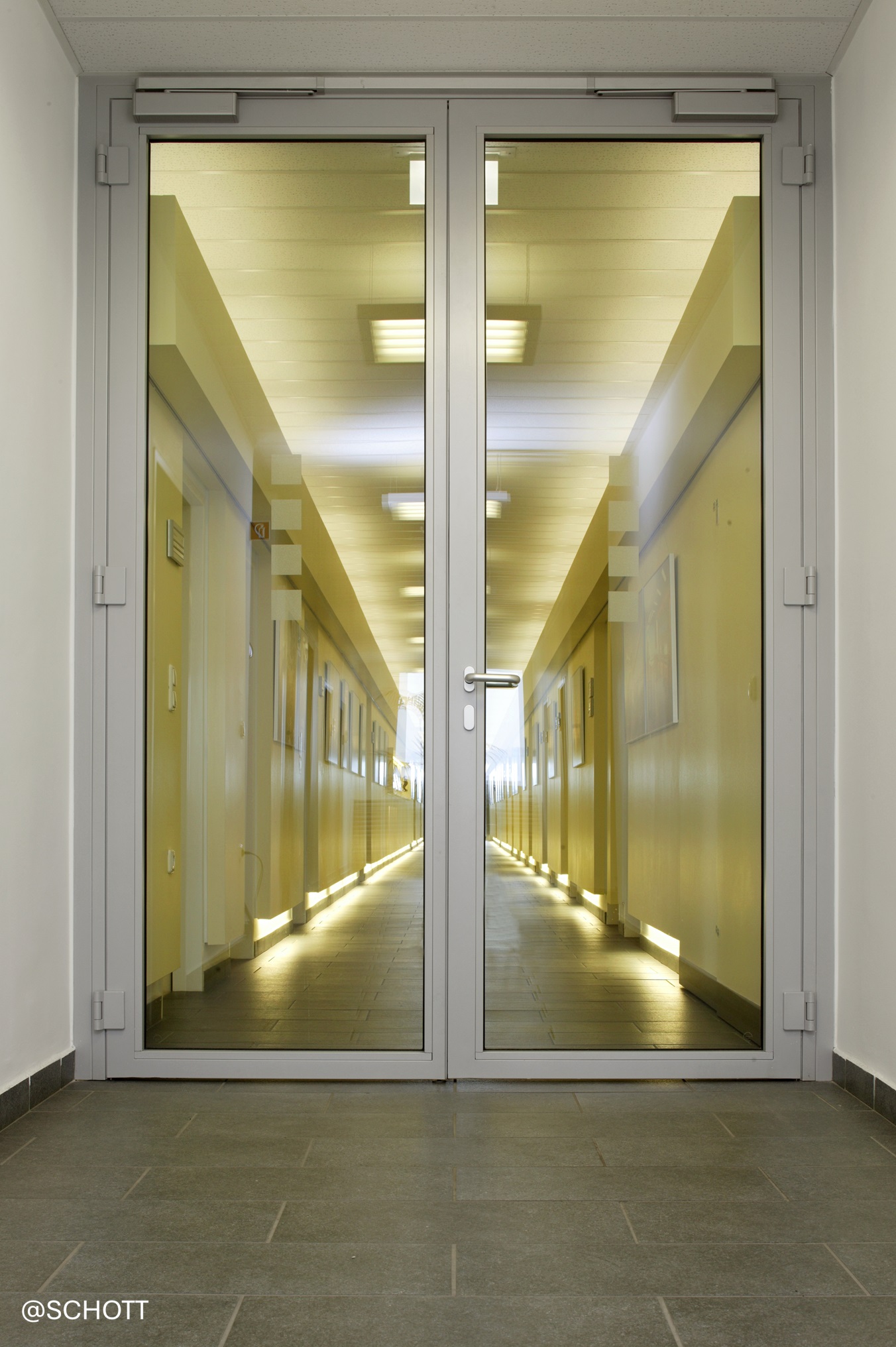
- Fire-rated doors and glazing: Steel doors with integrated fire-rated glass; automatic sliding fire doors for commercial or industrial spaces; fully glazed fire doors; stairwell enclosures.
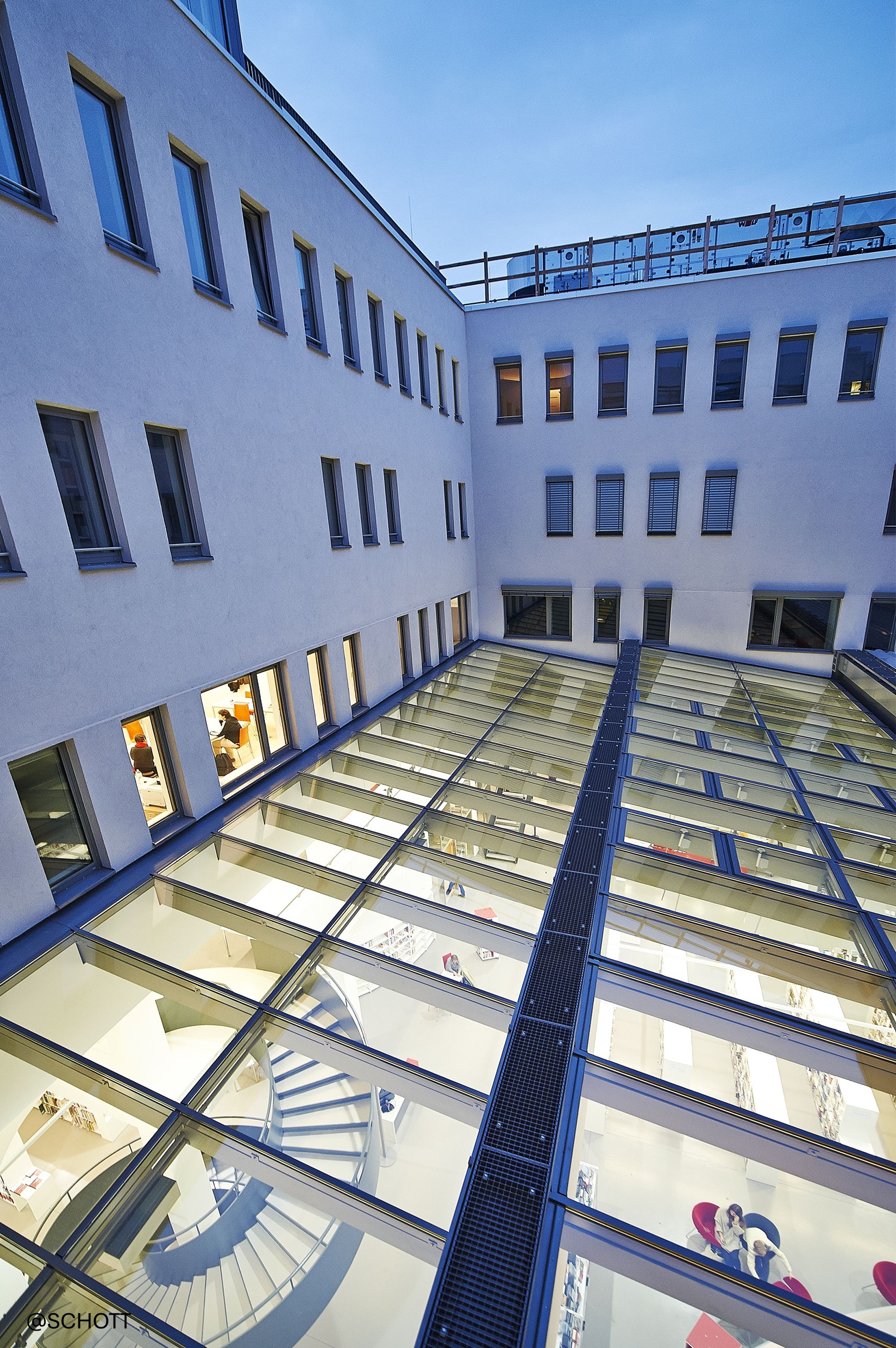
- Fire-rated façades and windows (exterior and interior): Exterior glazing requiring fire resistance to prevent fire spread between buildings; windows between workspaces and technical corridors or staircases.
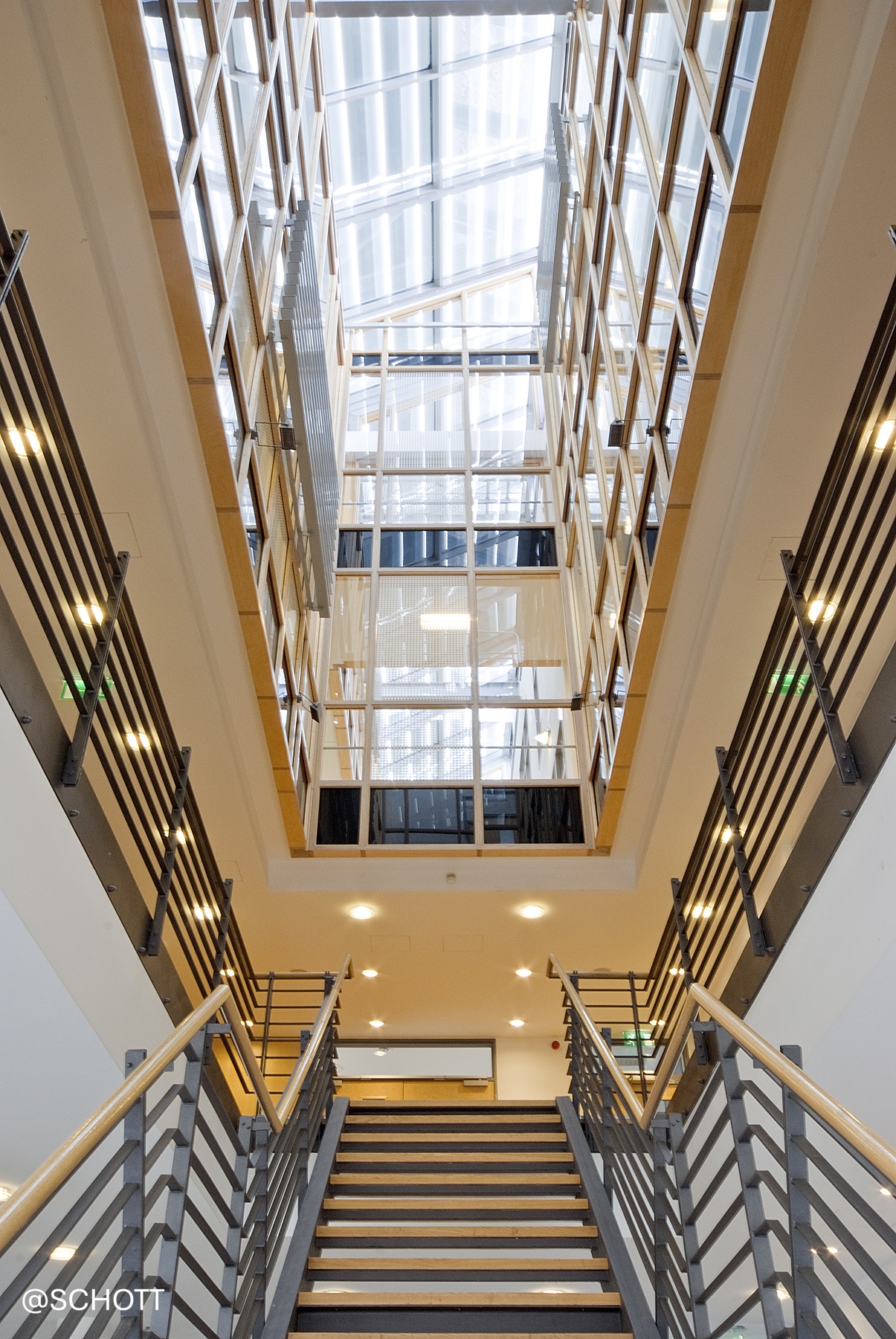
- Glazing for escape routes and elevators: Glazed panels in evacuation zones that must remain intact in case of fire; glazing for lift shafts or access halls; fire-rated doors and enclosures for elevators.
- Sills, skylights, floors, fixed panels: Decorative or technical glazed panels that combine fire safety with modern architectural aesthetics.
How to get a personalized offer for fire-resistant glass for your project?
Fill out the request-for-quote form below, call us or write to us directly, and the Transparent Design team – Schott approved processor for monolithic borosilicate glass – will get in touch with you!
If you send us the completed form with as many project details as possible, including application, glass type, thickness, required fire resistance class, .dwg files, sketches, and panel dimensions, we can quickly provide you with a price estimate.
Please note that it is important for us to know the project location from the very beginning in order to properly allocate your request.