


How to choose the right borosilicate glass for a shopping center: Tips for project managers
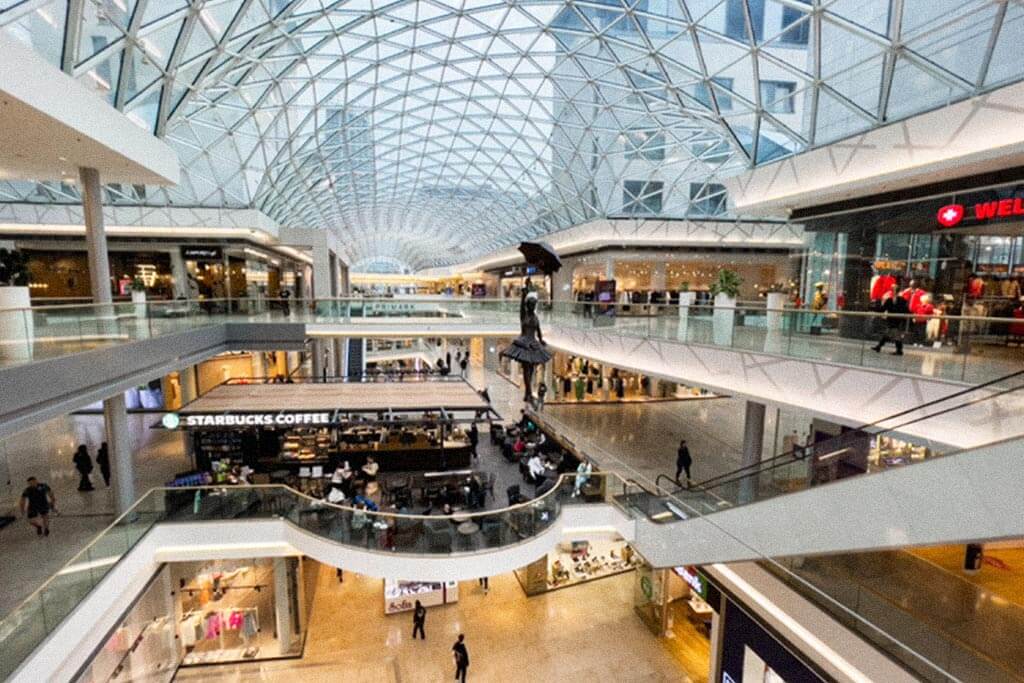
When you are coordinating a complex project, such as the fit-out or expansion of a shopping center, every technical decision has a major impact on the building’s safety, functionality and final appearance. One of the essential elements is choosing the right type of glass, especially when strict fire-resistance requirements are involved. In a high-traffic space like a mall, glazing, partitions and glass doors must combine transparency with protection, without compromising performance or aesthetics.
Fire-resistant borosilicate glass is a state-of-the-art solution for such applications. With superior technical properties and clear European classifications, this material provides safety in case of fire, while also offering optical clarity and long-term durability. Read on to discover how to choose the right type of borosilicate glass for your commercial project, based on architectural, technical and safety requirements!
What is borosilicate glass?
Borosilicate glass is a special type of high-performance glass, produced through a float process adapted for technical glass. It is composed of silica and boron oxide, elements that give it significantly higher thermal and chemical resistance compared to soda-lime glass (the industry standard).
Unlike conventional architectural glass, which can withstand temperature differences of up to 75°C, borosilicate glass resists variations of up to 520°C and has a melting point of approximately 1.700°C. These characteristics make it ideal for projects where fire protection is essential.
Transparent Design processes in Romania the PYRAN® S borosilicate glass, a monolithic, heat-treated glass produced by Schott Germany, offering fire resistance between 30 and 120 minutes (E30–E120), depending on the configuration. It is a lightweight, clear, aesthetic glass suitable for complex architectural applications where a balance between transparency and safety is required.
Advantages of borosilicate glass in commercial projects
In a shopping center, every component must deliver consistent performance and safety under intensive use. Borosilicate glass stands out through a series of technical advantages that clearly differentiate it from other types of glass.
- Enhanced fire resistance
PYRAN® S provides certified fire protection, maintaining structural integrity (Class E) for 30 to 120 minutes. It is ideal for evacuation corridors, glazed walls or access doors where flame and smoke tightness is required. - Transparency
The glass remains clear even at high temperatures, ensuring visibility and visual comfort. Unlike other fire-resistant materials, it does not become opaque during fire exposure. - Superior viscosity
Thanks to its chemical composition, borosilicate glass does not melt or flow when exposed to flames, maintaining its shape and dimensional stability. - CE marking
PYRAN® S complies with the European standards EN 13501-2, ensuring conformity with fire-resistance requirements for civil and industrial constructions.
In addition to these advantages, borosilicate glass is compatible with other types of processing: it can be laminated with other types of glass (for example, tempered glass), installed in insulating glass units, or used with certified fire-rated frames, depending on the system certification.
Architectural applications for fire-resistant borosilicate glass
Thanks to its adaptability and optical clarity, borosilicate glass can be integrated into a wide range of architectural applications specific to commercial buildings and retail centers.
- Fire-resistant partitions – interior glazed walls in evacuation areas, hallways, staircases, or technical rooms.
• Fire-rated doors and glazing – automatic sliding doors, glazing for escape routes or enclosures for staircases.
• Exterior and interior façades – glazing that prevents fire from spreading between buildings or between work areas.
• Technical enclosures and casings – for server rooms, elevators or data storage spaces.
• Skylights and fixed panels – decorative or technical solutions that combine safety with minimalist aesthetics.
These applications confirm that borosilicate glass is not only a technical solution but also a high-quality architectural element that can be fully integrated into the modern design of a shopping center.
Borosilicate glass vs. multilayer fire-resistant glass
To choose the right solution for your project, you need to understand the essential differences between the two main types of fire-resistant glass: monolithic borosilicate glass and laminated multilayer glass.
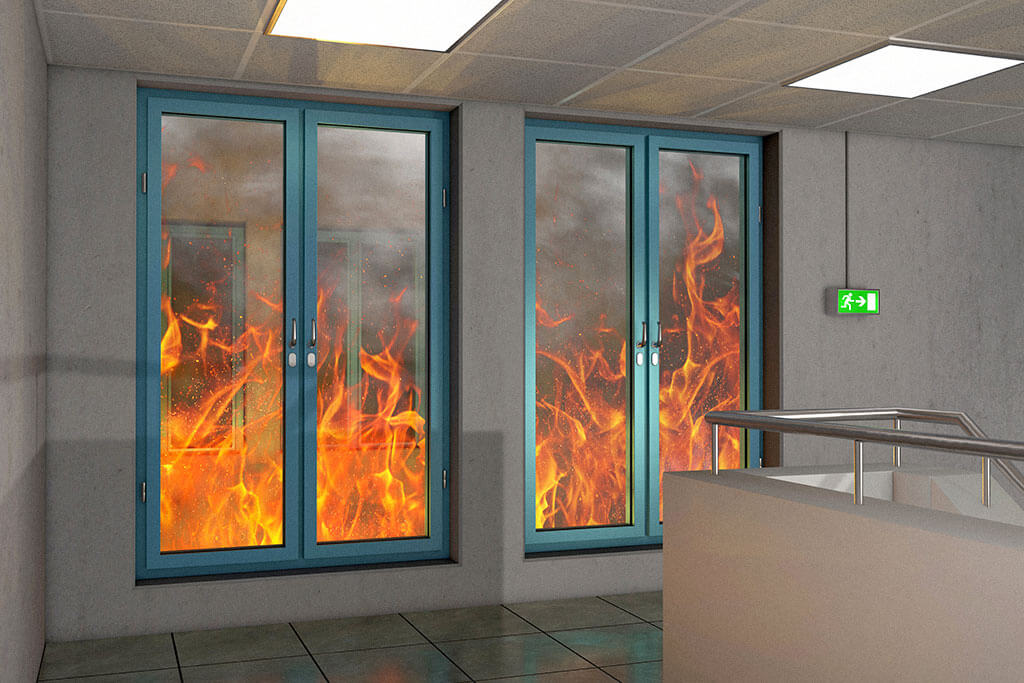
Monolithic borosilicate glass (e.g. PYRAN® S) provides fire integrity (Class E), meaning it prevents flames and smoke from passing through for a specified duration (E30–E120). However, it does not offer full thermal insulation, which is why it is recommended for areas where people can maintain a safe distance from the glazed surface—corridors, façades, escape routes or technical zones.
On the other hand, laminated multilayer glass, such as PYROBEL or PYROBELITE, offers extended protection through intumescent interlayers (“gel”) that activate at high temperatures. Depending on its structure, it can achieve EW classes (limits thermal radiation) or EI classes (blocks heat transfer). In the event of a fire, the inner interlayer/gel transforms into an opaque shield that prevents heat from spreading to the unexposed side.
In short:
• PYRAN® S (monolithic borosilicate glass) – E30–E120 protection, maximum clarity, reduced weight.
• PYROBEL / PYROBELITE (laminated multilayer glass) – EW/EI protection, superior thermal insulation, greater thicknesses.
The choice between the two depends on the placement of the glazing and the safety requirements of the project. In a shopping center, you can use borosilicate glass in evacuation areas and façades, while multilayer glass is recommended for interior partitions where additional thermal protection is required.
Steps for choosing the right borosilicate glass
1. Identify the technical specifications for your space
The first step is analyzing the project requirements: the type of building, the location of the glazing, the required fire-resistance rating and the applicable safety standards. In a shopping center, glazing in evacuation routes, elevator shafts or partition walls typically requires an E60 or E90 rating.
Consult with the HVAC/fire safety engineer and the fire-protection specialist to clearly define the required fire rating as well as the relevant certifications for commercial applications.
2. Choose an experienced processor with modern technology
The quality of borosilicate glass depends largely on the processor you choose. Transparent Design is one of the three processors approved in Europe by Schott Germany for the thermal treatment and processing of PYRAN® S glass.
Select a partner equipped with in-house machinery for lamination, cutting, tempering and who follows the processing guidelines provided by the glass manufacturer to ensure CE compliance. Correct processing guarantees predictable performance in case of fire and safe installation within the glazing system.
3. Adapt the glass to the design and branding
A shopping center is not only a functional space but also one that communicates through design. Borosilicate glass can be integrated into the architectural concept by laminating it with other types of glass (tinted, UV-coated, or Low-E) or by combining it with ceramic digital printing.
This allows you to create customized glazing that meets safety requirements while preserving the brand’s visual identity and the aesthetic coherence of the space.
4. Install using approved and compatible accessories
The fire resistance of glazing does not depend solely on the glass, but on the entire system: frames, profiles, gaskets and sealants. Always use systems tested and certified together with the selected glass.
Fire-rated frames and hardware are recommended, as they maintain integrity and tightness in the event of a fire. Without these components, the declared performance of the glass is no longer valid.
For correct and safe installation, you may also consult the article on mistakes to avoid when installing laminated glass in shopping centers, where the most frequent errors and prevention methods are explained.
5. Maximize the natural lighting of the space
An important advantage of borosilicate glass is its high light transmission. In a shopping center, where visual comfort and energy efficiency matter, correctly positioning the glazing can reduce the need for artificial lighting and enhance the feeling of openness.
Plan the placement of fire-rated glazing so that you achieve both the required protection and optimal natural lighting for visitors. Combine borosilicate glass with tempered glass partitions to create spacious, energy-efficient, well-lit areas.
Discover on the Transparent Design blog how to maximize natural light in commercial spaces using tempered glass walls!
Useful recommendations for project managers
Choosing borosilicate glass for a shopping center requires a balanced approach between safety requirements, design and costs. A few recommendations can help you make the right decision:
- Request fire-resistance certifications for each type of glazing from the design phase.
• Ensure that the selected glass is compatible with the installation system (frames, gaskets, sealants).
• Check the CE marking and compliance documents for the processed product.
• Collaborate with an authorized processor who can provide the appropriate glass within complete system solutions.
• Choose smart combinations of borosilicate glass (for fire integrity) and multilayer glass (for thermal insulation), depending on the location.
• Do not neglect maintenance and periodic inspection of fire-rated glazing—they must retain their properties throughout their service life.
Choosing the right glass for a shopping center is not just about aesthetics. Fire safety, durability and compliance with European standards are decisive factors for the success of the project. Fire-resistant borosilicate glass processed by Transparent Design provides certified performance, clarity and reliability in complex commercial applications. Depending on the space requirements, this solution can be combined with multilayer fire-resistant glass for an additional level of thermal protection. By working with an experienced processor and selecting the correct material, you ensure that your commercial project meets the highest standards of safety, efficiency and aesthetics.