


The environmental benefits of using laminated glass in large architectural projects
In contemporary architectural projects, the focus on sustainability has become an essential requirement, not just an option. Developers, general contractors and architects are constantly seeking high-performance materials, knowing that the balance between durability, energy efficiency, and safety must be sustainable in the long term. In this context, laminated glass stands out as one of the premium solutions with clear environmental benefits, justifying its integration into large-scale projects—from office buildings and hotels to residential complexes and commercial spaces.
Through its structural properties, adaptability to current industry requirements and contribution to a building’s energy performance, laminated glass provides both the technical and ecological advantages needed for your projects. In a market where environmental standards are becoming increasingly strict, choosing the right materials is more important than ever.
What is laminated glass and why does it influence the sustainability of a large project?
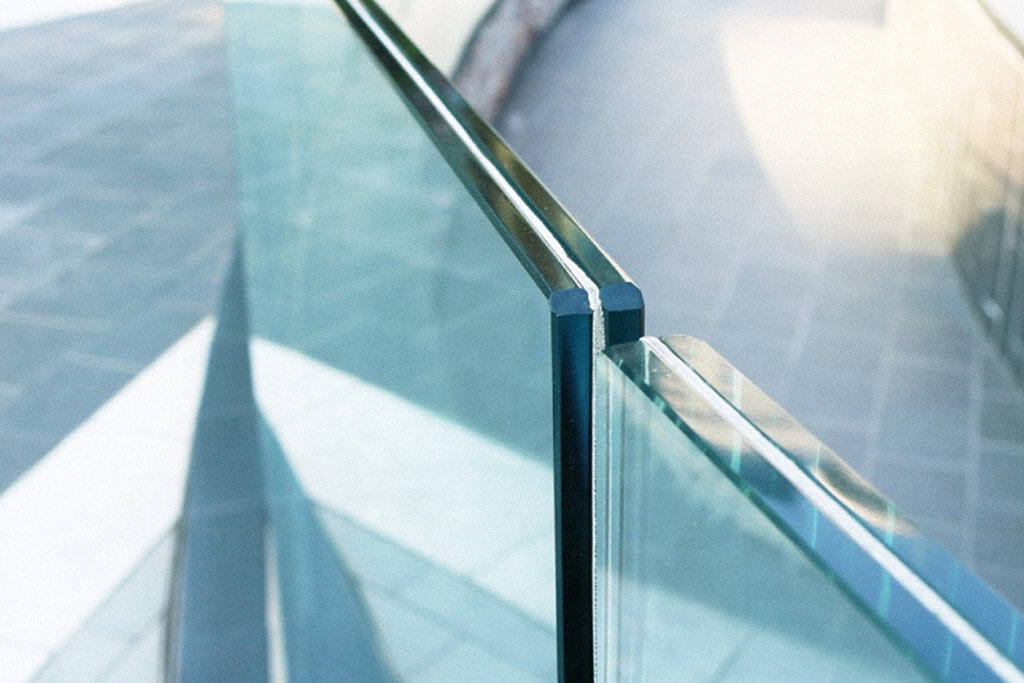
To understand the ecological impact of this type of glass, it is important to know what laminated glass is. It is a composite created by bonding two or more glass panes under heat, with elastic interlayers such as EVA, PVB, or Sentry inserted between them. Through the lamination process, the glass gains enhanced safety, strength, and structural stability.
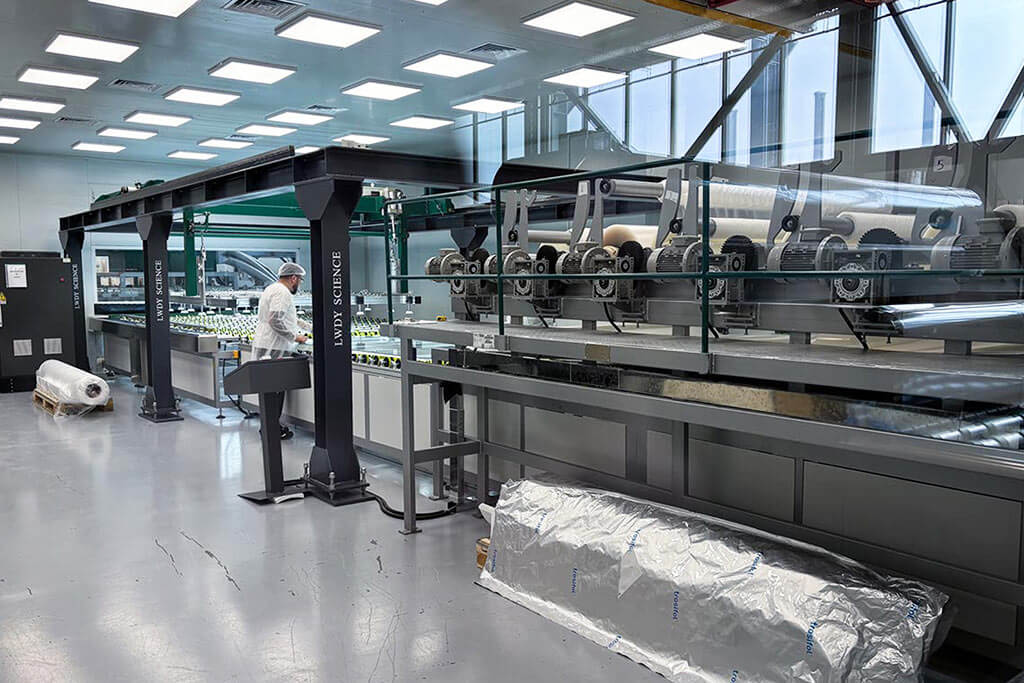
In modern glass processing factories, such as Transparent Design’s facility, lamination technology is supported by high-performance equipment, including ovens and automated autoclave lines, which allow the processing of JUMBO-sized glass sheets. This level of technology ensures not only quality but also resource efficiency, directly impacting on the ecological footprint of the project.
In this format, laminated glass becomes a durable, safe, and versatile material, while also offering possibilities for graphic customization, including ceramic digital printing or the use of colored interlayers.
Why does laminated glass have a positive ecological impact?
High durability and reduced replacements
One of the most important ecological benefits of laminated glass is its extended lifespan. In large-scale projects, choosing a highly durable material significantly reduces the frequency of replacements, which directly impacts the resources consumed over time.
Laminated glass is resistant to:
• Impact
• Repeated mechanical stress
• Temperature variations
• UV radiation (PVB and Sentry interlayers protect against yellowing over time)
• External factors such as wind, hail or differential pressure
The durability of the material inherently means reduced consumption of raw materials, fewer transport cycles, and fewer additional industrial processes, contributing to a sustainable life cycle.
Increased safety and protection for structures
Because fragments remain bonded to the interlayer in the event of breakage, laminated glass ensures safety in all types of projects, from office buildings to shopping centers and luxury hotels. This feature inherently helps protect users and reduces the risk of material losses.
Moreover, in certain contexts, laminated glass lowers the risks of vandalism, burglary, explosions or fires, providing superior-strength solutions, including bullet-resistant or blast-resistant glazing. The fewer post-project interventions required, the lower the ecological impact of the building.
Contribution to building energy efficiency
Energy performance is one of the most important priorities in contemporary architecture. Laminated glass, when incorporated into an insulated glazing system, contributes to a building’s energy efficiency by reducing both heat loss during the cold season and heat gain from the outside in summer. In such a system, laminated glass actively helps optimize energy consumption by:
- Reducing thermal transfer, especially when combined with low-E or solar-control glazing
• Filtering UV radiation, preventing overheating of large glazed areas
• Improving acoustic insulation, which allows HVAC systems to be optimized for interior comfort
Additional details on how glass affects energy consumption in commercial buildings can be found in the article on energy efficiency in shopping centers. There, you will see how advanced glazing materials, such as laminated glass, can significantly reduce operational costs and lower the energy footprint. When applied correctly in a large project, glazing contributes to green building certifications.
Sustainable architectural system compatibility
For projects aiming to maximize natural light, laminated glass allows the use of large surfaces without compromising safety. This reduces the need for artificial lighting indoors and lowers long-term energy consumption.
Additional Benefits:
• High transparency and optical clarity;
• Possibility of use in JUMBO-sized constructions;
• Integration into complex structural systems.
Thanks to its adaptability, laminated glass meets the requirements of sustainable projects without limiting architectural creativity.
Processing laminated glass in modern factories and its environmental impact
Laminated glass is not only a high-performance material but also processed under technologically optimized conditions for efficiency and reduced resource consumption. At the Transparent Design glass factory, laminated glass is processed using:
- State-of-the-art, energy-efficient laminating ovens;
• Automated lines with autoclaves, which reduce energy consumption relative to processed volumes;
• The capability to process EVA, PVB and Sentry interlayers;
• A lamination capacity of approximately 1.200 m² per day;
• KURARAY certification for Sentry interlayer – ensuring stability and performance;
• BSI Kitemark certification for “Safety Glass for Construction”: laminated glass BS EN 14449:2005.
Modern equipment enables efficient energy use, minimizes material waste and optimizes productivity, resulting in an industrial process with a reduced ecological footprint.
Applications of laminated glass in large-scale projects and their ecological benefits
Integrating laminated glass into large-scale projects is not just an aesthetic or structural choice; it directly contributes to the overall sustainability of the development.
Commercial buildings and office centers
In commercial projects, laminated glass provides:
• Durable façades resistant to impact and environmental factors
• Controlled light transmission and reductions in energy consumption
• Safety for tall glazing installations
Many modern buildings rely on extensive glazing, and the use of laminated glass is essential for optimizing energy performance.
Hotels and HoReCa projects
Integrating laminated glass in high-traffic areas, balustrades, access zones, partitions and wellness spaces helps to:
• Reduce the risk of accidents
• Maintain a flawless appearance over time
• Provide resistance to moisture and temperature variations
A relevant example of advanced glazing use can be found in a previous article about tempered glass in luxury hotel design, which discusses the combination of tempered and laminated glass in premium applications.
Large residential developments
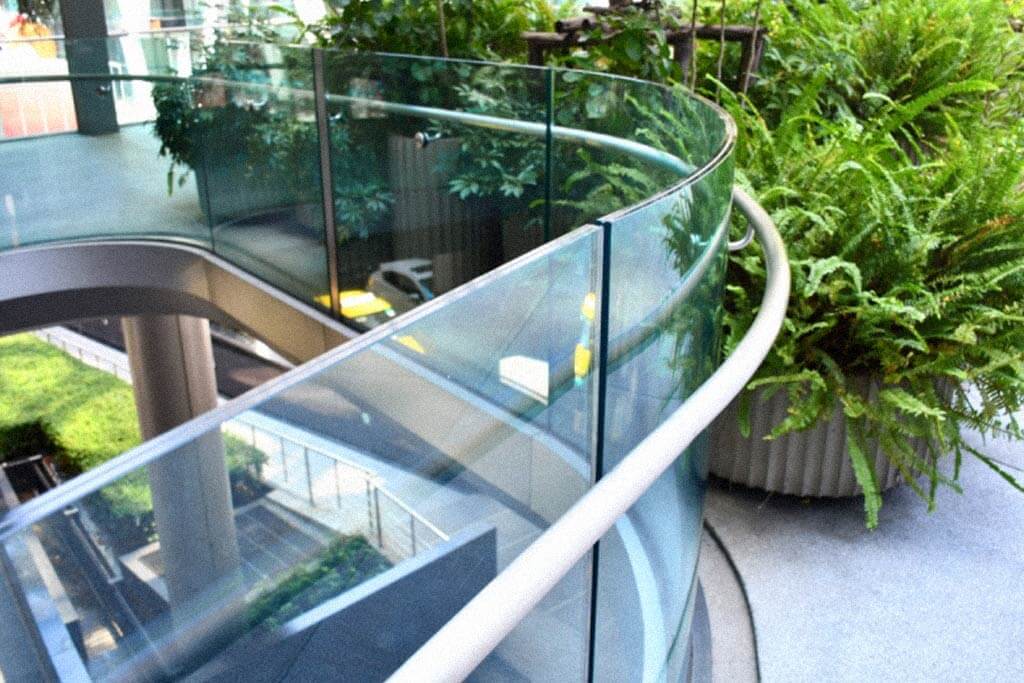
In residential projects, laminated glass becomes a central element for balustrades, partitions, staircases and exterior glazing. It provides protection, conserves resources over time and contributes to user comfort. A detailed analysis on choosing the right structure can be found in a blog article about how to select the type of laminated glass for a residential complex.
In an industry where environmental criteria are becoming decisive in design decisions, laminated glass is one of the most sustainable options available for large-scale projects. By combining safety, durability, architectural flexibility, and a significant contribution to energy efficiency, this material allows you to develop structures that meet current technical standards and evolving environmental requirements.
Beyond its technical advantages, using laminated glass in your projects gives you the opportunity to integrate modern aesthetic solutions without compromising user safety or ecological performance. For practical inspiration, explore Transparent Design’s project portfolio or leverage the experience of companies with full in-house processing capabilities